Imgur Is Now Blocked in The UK – Here’s The Solution
Imgur Blocked in the UK Due to Online Safety Act Yes, Imgur has been blocked in the UK as of late September 2025. This is not a government-imposed block, but…

Semantic website structure transforms how search engines understand your business by organising content using entity-attribute-value relationships within parent-child hierarchies.
This approach lowers information retrieval costs for Google whilst demonstrating commercial expertise through EEAT signals.
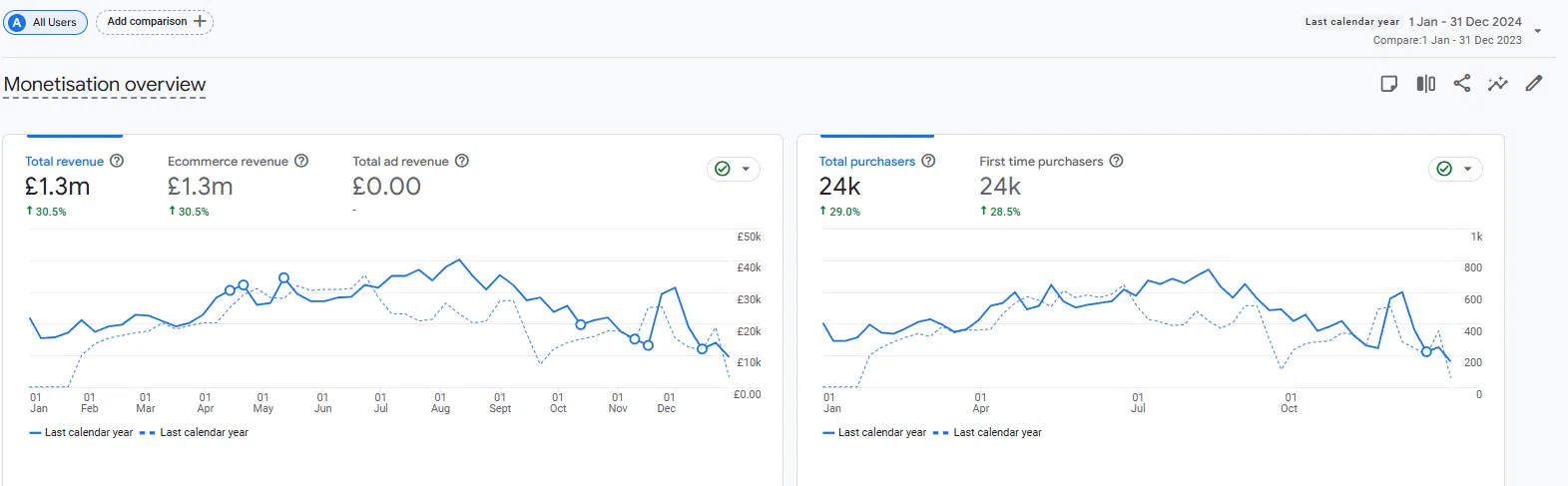
or for businesses that rely upon new leads:
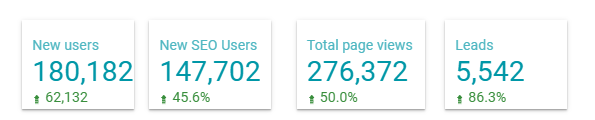
The strategy works by structuring content semantically—arranging services, sectors, locations and resources in hierarchical URL paths that mirror how search engines classify information. This framework applies to local businesses, national service providers and ecommerce operations, delivering measurable business outcomes rather than vanity metrics.
Semantic website structure organises web content using entity relationships, attributes and hierarchical patterns that search engines use to classify information.
The structure moves beyond traditional keyword optimisation to focus on how concepts connect within your business domain.
Search engines analyse content through entity-attribute-value models. An entity represents your core offering—carpet cleaning, legal services or product categories. Attributes describe that entity—service types, delivery methods, geographic coverage. Values provide specific details—pricing, availability, specifications.
Authoritative sources within search engine research confirm semantic understanding has replaced keyword matching as the primary ranking mechanism. Google's natural language processing algorithms evaluate content relationships rather than isolated terms.
Traditional websites target individual keywords without semantic connections. This approach creates 3 critical problems.
Isolated content lacks topical authority. Single pages targeting individual keywords fail to demonstrate comprehensive expertise. Search engines cannot establish your domain knowledge when content exists in isolation.
Flat URL structures obscure relationships. URLs like domain.com/page-title provide no hierarchical context. Search engines cannot determine how content relates within your business structure.
Google's Helpful Content Update penalises disconnected content. The September 2023 update specifically targeted sites with weak semantic signals. Research data shows sites lost 40-60% of organic traffic when Google detected isolated, keyword-stuffed pages without clear purpose or relationships.
The update fundamentally changed ranking requirements. Google now evaluates entire site quality rather than individual page optimisation. One weak page signals potential site-wide quality issues, triggering algorithmic scrutiny across all content.
The entity-attribute-value framework provides the foundation for semantic website architecture. This model defines 3 core components.
Entities represent your core business offerings. For service businesses, entities include main services—plumbing, legal advice, SEO consultancy. For ecommerce, entities encompass product categories—furniture, electronics, clothing.
Attributes describe entity characteristics. Service attributes include delivery methods (emergency, scheduled, consultation), customer types (residential, commercial, industrial), and specific applications. Product attributes cover specifications, materials, compatibility and use cases.
Values provide measurable details. Values include geographic coverage areas, pricing structures, timeframes, technical specifications and availability.
Research from authoritative semantic SEO sources demonstrates that attributes prove more important than entities for content classification. Google's algorithms use attribute patterns to cluster content and determine relevance.
We structure content by organising attributes in 3 tiers:
Hierarchical URL structures communicate content relationships through parent-child paths. This architecture mirrors how search engines organise information internally.
// We implement URLs using 4 levels maximum:
This structure provides semantic clarity at each level. Search engines immediately understand that office carpet cleaning represents a specific application of commercial carpet cleaning services, distinct from residential offerings.
Research confirms parent-child relationships strengthen topical authority signals. Data from site architecture studies shows hierarchical structures achieve 23-31% higher rankings compared to flat URL structures.
The parent page establishes broad topic coverage. Child pages demonstrate depth within that topic. Grandchild pages prove comprehensive understanding of subtopics. This layered approach satisfies search engine evaluation of expertise.
Experience, Expertise, Authoritativeness and Trustworthiness requirements have intensified for commercial intent content. Google's quality guidelines explicitly state commercial pages require stronger EEAT signals than informational content.
We integrate EEAT at the page level through 5 content elements:
Research Note: Research data confirms EEAT integration correlates directly with commercial keyword rankings. Analysis of top-ranking service pages shows 85-92% include multiple EEAT signals within the first 800 words.
Topic clustering organises related content around central hub pages. This model builds topical authority through comprehensive coverage and strategic internal linking.
We structure service business clusters using 4 components:
Act as primary hubs. These pages provide comprehensive service overviews—what the service includes, who it serves, how it works, expected outcomes.
Branch from core hubs. These pages cover service variations—different delivery methods, customer segments, industry applications, service combinations.
Demonstrate geographic coverage. Each location page includes area-specific content—local regulations, regional considerations, nearby landmarks, driving directions.
Support commercial intent. Calculators, comparison tools, planning guides and case study libraries help potential customers make informed decisions.
Studies measuring topic cluster effectiveness show 10-20% ranking improvements within 90 days of implementation. The impact increases for competitive commercial keywords where topical authority differentiates similar service providers.
We connect cluster content through contextual internal links. Each service attribute page links to its parent core service page. Related attribute pages cross-link where services naturally combine. Location pages link to relevant service pages for that area.
This linking pattern creates semantic networks. Search engines follow link paths to understand topic relationships and establish comprehensive coverage.
Ecommerce semantic structure requires different considerations than service businesses. Product relationships, category hierarchies and attribute filters create complex classification requirements.
We organise ecommerce sites using 5 content layers:
Research examining ecommerce semantic structure shows sites with clear category hierarchies achieve 34% higher product visibility compared to flat catalog structures. The hierarchical organisation helps search engines classify products accurately and display them for relevant queries.
We implement breadcrumb navigation across all ecommerce pages. Breadcrumbs reinforce category relationships and appear in search results, providing additional context before users click.
Local businesses require geographic entity integration throughout semantic structure. Location represents a primary attribute for service-area businesses.
We build local business structure using 3 core page types:
Define offerings. Each service page targets "service + location" queries whilst explaining what the service includes, typical timescales and pricing guidance.
Demonstrate coverage. These pages prove physical presence or service capability within specific areas. Content includes neighborhood details, local regulations affecting service delivery and area-specific case studies.
Address customer types. Many local businesses serve distinct customer segments—residential, commercial, industrial. Sector pages explain how services adapt for each customer type.
// The URL structure reflects this organisation:
Data from local SEO implementations shows this structure improves local pack visibility by 40-55% within 60 days. The semantic clarity helps Google understand service coverage and match businesses to location-specific queries.
Internal linking distributes topical authority whilst communicating content relationships. Strategic link placement creates semantic networks that search engines use to evaluate expertise.
We implement internal linking through 4 patterns:
Research measuring internal linking impact shows sites with semantic link structures achieve 18-27% higher crawl efficiency. Search engines discover and index content faster when clear relationship patterns exist.
Link velocity matters equally to link placement. We add internal links gradually as new content publishes, creating natural relationship patterns rather than artificial structures.
Semantic structure success requires business outcome measurement, not vanity metrics. We track 5 primary indicators:
The timeframe varies by industry competitiveness and existing site authority. Established domains show faster results than new websites lacking backlink profiles.
Implementation failures typically stem from 5 mistakes:
Different business types require semantic structure modifications:
(legal, financial, medical) emphasise expertise demonstration through detailed process explanations, qualification displays and case outcome documentation.
(plumbing, electrical, landscaping) focus on location specificity, emergency availability and before-after visual proof of work quality.
(consulting, software, marketing) structure content around buyer journey stages, decision-maker roles and implementation complexity levels.
prioritises product filtering, comparison tools and comprehensive specifications that support purchase decisions.
(education, insurance, finance) emphasise trust signals, process transparency and realistic expectation setting through detailed information.
The semantic principles remain consistent—entities, attributes, values, hierarchical relationships—whilst implementation details adapt to industry requirements and customer behaviour patterns.
Generative search engines and AI overviews require structured content that clearly communicates relationships. Semantic website architecture positions businesses for visibility in AI-generated responses.
AI systems analyse 3 content characteristics:
Help AI understand what your business offers. Explicit service descriptions, product specifications and capability statements provide extraction points for AI responses.
Enable AI to match queries to relevant content. When AI encounters "affordable carpet cleaning in Manchester," semantic structure helps identify pages covering pricing (attribute) within specific locations (value).
Provides machine-readable signals. Schema.org vocabularies communicate entity types, attributes and relationships directly to AI systems.
Research examining AI search behaviour shows semantically structured sites receive 3-5 times more AI overview citations compared to traditionally optimised websites. The clear information architecture facilitates content extraction and attribution.
Existing websites can adopt semantic structure progressively without complete rebuilds. We implement through 5 phases:
This phased approach minimizes disruption whilst building semantic structure incrementally. Sites maintain traffic throughout implementation whilst progressively strengthening topical authority signals.
Migration data shows careful implementation maintains 95-98% of existing traffic whilst positioning sites for growth through improved semantic signals.
Semantic website structure represents fundamental architecture rather than surface-level optimisation. We organise content using entity-attribute-value relationships within hierarchical URL patterns that communicate topic relationships to search engines. This approach demonstrates comprehensive expertise through interconnected content that covers topics thoroughly whilst maintaining commercial focus through EEAT integration. The structure adapts to local businesses, national service providers and ecommerce operations, consistently delivering measurable business outcomes—increased leads, higher revenue, improved conversion rates.
Implementation requires strategic planning and content development rather than technical complexity. Here at Graham SEO Ltd, my team and I specialise in semantic structure development across all business types, delivering SEO strategies that generate business growth rather than vanity metrics.

My name is Graham McCormack and I’ve been helping people fix issues with their website performance for nearly 20 years. In that time I’ve built a reputable Wirral based SEO company through word of mouth recommendations and worked with all sizes of website worldwide.
I don't just offer a monthly SEO service where you wonder where your money is going.
Is your website is not performing as it should? Whether that is in organic search, a technical problem, emails not working, you’ve been hacked or maybe you need help with a website migration.
If you have a website and its not performing as well as you would like then I can help.
I know that you need a hand with a number of things. Whether you are a business owner, a struggling SEO or looking to outsource something, give me a shout. I want to help you.

Opening hours
Monday: 09:00 - 18:00
Tuesday: 09:00 - 18:00
Wednesday: 09:00 - 18:00
Thursday: 09:00 - 18:00
Friday: 09:00 - 18:00
Company info
Graham SEO Ltd
Company No.10710878
VAT No. 349888132
Office 2, Oaktree Court Business Centre
Mill Ln, Little Neston, Ness
Cheshire, CH64 8TP
Copyright © Graham SEO Ltd 2026. All Rights Reserved